


Wise Leaders in Action
2026/09/25
Kahori Miyake (Fellow Officer, Sumitomo Mitsui Trust Bank, Ltd., Executive Manager, Sustainability Strategy and Solutions Department), Class of 2003
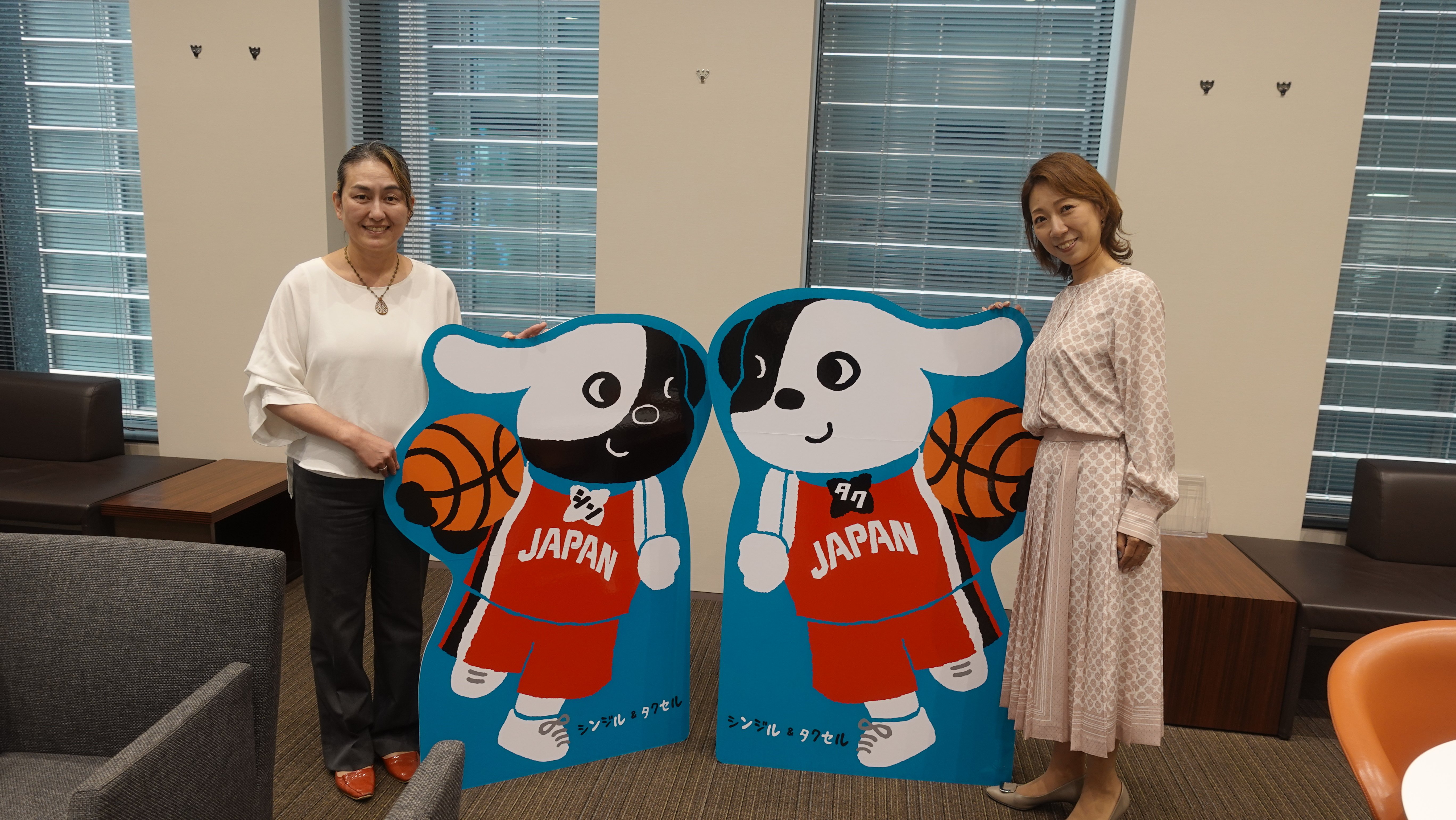
“Not everything can be decided in black and white. In reality, there is a wide gray area in between.”
After completing the MBA program at Hitotsubashi ICS, Kahori returned to AEON, where she led a long-term vision project for the group. She later became president of Claire’s, an accessories retail subsidiary, and then moved into customer service, where she worked to connect the voices of customers to management. Her responsibilities continued to expand to environmental issues, quality management, and climate change. Today, she works on sustainability from a financial perspective at Sumitomo Mitsui Trust Group.
In this conversation, we asked Kahori how her learning at ICS has shaped her career, her approach to leadership, and the way she faces complex issues that cannot be reduced to simple answers.
* * *
Creating a Long-Term Vision
Satoko
After graduating from ICS, what kind of career path did you follow?
Kahori
I came to ICS as a company-sponsored student, so after graduation I returned to AEON. One major turning point came in 2006, when I was appointed to lead the “2020 Vision Project.”
AEON did not build its strategy only around three-year mid-term plans. It also developed a long-term vision looking ten years ahead, which served as the foundation for those plans. AEON first imagined what the company should become in the future, and then worked backward to identify the actions needed in the present. Today, this approach is often called “backcasting,” but at the time the term was not yet widely used.
Satoko
So you were already involved in shaping AEON’s long-term direction early in your career.
Kahori
Yes. In that project, we spent a full year thinking about what society might look like in 2020, what kind of company AEON should become, and what kind of value we should provide.
The team brought together about ten young employees from across AEON’s major businesses, including supermarkets, general merchandise stores, finance, specialty stores, and convenience stores. Positioned directly under the holding company, it functioned as a cross-functional team that looked across the group as a whole.
Working on the 2020 Vision Project connected strongly with what I had learned at ICS, especially strategy and knowledge creation. When I studied them in class, the theories had felt rather abstract. But through this project, I was able to use those ideas to think about the future of my own company. It was a very exciting experience, because what I had learned became connected to real work.
Putting MBA Learning into Practice
Satoko
After that, you also became president of a subsidiary.
Kahori
Yes. I was assigned as president of Claire’s, an accessories retail subsidiary. It had about 200 full-time employees, a total workforce of around 900 including part-time staff, and roughly 200 stores.
Within the AEON Group, Claire’s may have been a relatively small company. But as president, I was responsible for everything: strategy, marketing, human resources, finance, and operations. Everything I had studied in the MBA program was tested through real management decisions.
Satoko
So it was a role that required you to bring together everything you had learned in the MBA program.
Kahori
Exactly. There were many moments when I remembered cases we had studied. For example, when I faced an HR issue, I would think, “This resembles a case we discussed.” The same was true in strategy and marketing. Ideas from class often came back to me.
But real management is not as neatly organized as a case. The issues are more complex, and the answers are not always clear. Even when a strategy seems right, it only becomes meaningful when people on the front line understand it, accept it, and act on it. I realized that knowing a theory and putting it into practice in an organization are very different things.
My five years as president were not all smooth. There were many things I could not do as well as I had hoped. An MBA did not give me ready-made answers, nor did it make me a perfect manager.
Still, I do not think that opportunity would have come to me if I had not gone to ICS. The MBA program gave me a foundation I could return to whenever I faced a difficult problem. I may not be able to say that my time as president was a great success, but there were many things I was able to manage because of what I had learned.
Turning Customer Voices into Management Insight
Satoko
I understand that you later moved into customer service.
Kahori
Yes. After returning from Claire’s, I moved to the customer service department. People often think of customer service as a function that mainly handles complaints and claims. But at AEON, it played a very important role in management. Customer feedback was taken seriously by senior executives and reflected directly in management decisions. Looking back, that experience became a major turning point in my career.
Satoko
In what way was it a turning point?
Kahori
In many Japanese companies, when people hear the word “marketing,” they often think of advertising, promotion, or campaigns. But real marketing is not limited to that.
In the customer service department, we received an enormous amount of customer feedback from stores and businesses across Japan. We accumulated those voices as data, interpreted what customers were struggling with and what they were seeking, and used those insights to improve products, services, and store operations. I felt that this was where marketing truly begins.
At that point, the service management and marketing concepts I had learned at ICS came together for me.
Satoko
So customer feedback was not just something to respond to. It became a source of management insight and value creation.
Kahori
Yes. Bringing the voice of the customer into management became a major theme for me. Later, when I became responsible for environmental issues and quality management, that experience helped me think not only from the perspective of customers, but also from the broader perspective of society.
From Global Citizenship to Climate Action
Satoko
How did that broader perspective later connect to sustainability and climate change?
Kahori
While I was in customer service, my responsibilities later expanded to include environmental issues and quality management. Those roles allowed me to think more concretely about the responsibilities companies have toward society and the environment.
Today, sustainability and decarbonization are major themes in corporate management. But when I was at ICS, those words were not as widely used as they are now. The SDGs and the Paris Agreement came much later.
Even so, ICS already had the idea of Global Citizenship. We were taught that companies are responsible not only for generating profits, but also for contributing to society and the environment. We were also encouraged to ask why such questions needed to be part of an MBA education.
Satoko
That sounds like one of the roots of what we now call Wise Leadership.
Kahori
I think so. When the SDGs began to gain attention, they did not feel like a completely new idea to me. Rather, my reaction was, “Yes, of course.”
Among the many issues related to sustainability, climate change is especially important. Climate change is not just an environmental issue. It is directly connected to business strategy, investment decisions, and the future of society. From around 2017, I became more deeply involved in climate change, and the more I learned, the more I came to understand its complexity and importance.
Navigating Gray Areas in Sustainable Finance
Satoko
Today, you work on sustainability from a financial perspective. Is that very different from your experience at AEON?
Kahori
It is very different. In retail, we created value through products and services. Finance, by contrast, creates value through the flow and use of capital.
That is also what makes finance difficult. Money itself does not tell you what it will be used for. The same amount of capital can have a very different meaning depending on whether it supports renewable energy or a business that has a negative impact on society. That is why I believe financial institutions have a responsibility not only to look at returns, but also to consider where capital flows and what kind of impact it creates.
Satoko
So financial institutions have to think carefully about the responsibility that comes with directing capital.
Kahori
Yes. In finance, we often face extremely difficult judgments. For example, how should we view the defense industry? When it comes to chemical weapons and other weapons restricted under international treaties, the judgment may be relatively straightforward.
But in reality, many related areas are much harder to judge. How should we think about equipment used for defense purposes? How should we position tear gas or protective masks? How should we think about weapons support for countries currently at war, where questions of security and humanitarian responsibility are involved?
There are many issues that cannot simply be judged as good or bad.
Satoko
So the challenge is where to draw the line.
Kahori
Exactly. The real difficulty lies in the wide gray area in between. How far can we be involved? At what point should we draw the line? Unless we clarify these questions, the organization cannot act.
In Wise Leadership, the ability to make judgments in pursuit of the common good is very important. But in practice, we cannot rely only on an individual’s feelings or intuition. We need to create standards, establish processes, and make our judgments explainable. That is where the real difficulty lies.
Balancing Purpose and Sustainability in Eldercare
Satoko
Today, you are involved in IT solutions for eldercare providers. What makes this field challenging from a management perspective?
Kahori
What I have strongly felt since entering the eldercare field is that it is built on both purpose and economics.
Care workers want to support older adults. That moral commitment is at the heart of the work. At the same time, eldercare is also a business. Without profit, the service cannot be sustained.
For example, giving very attentive care to one specific person may be wonderful for that individual. But if too much time and staffing are concentrated on one person, others may receive less care, and the overall service may become unsustainable.
The question is how to value each person while continuing to serve everyone who needs care. In eldercare, that balance is extremely important.
Satoko
So this is a field where the balance between morality and economics is directly tested.
Kahori
Yes. Profit alone is not enough. But good intentions alone cannot sustain a business either.
That is why we need to respect the purpose at the heart of care while also making the business sustainable. Our role is to help eldercare providers achieve both through technology.
Leadership Takes Different Forms
Satoko
What does leadership mean to you?
Kahori
I do not think leadership can be defined in just one way. The kind of leadership an organization needs depends on its situation and what it is trying to achieve.
Sometimes strong top-down leadership is necessary. At other times, a bottom-up approach works better. In some situations, what matters most is the ability to move flexibly and adapt quickly. I do not think there is one correct form of leadership.
Satoko
What kind of leader do you think you are?
Kahori
I think I am more of a bottom-up leader. I tend to move forward by listening to people’s opinions and building consensus. I am not the type who naturally leads from the front.
There were times when I struggled with that. Some team members told me they wanted me to show stronger leadership. But changing your own leadership style is not easy.
That experience made me realize the importance of complementing one another as a team. If there is a strong leader setting the direction, someone else may need to connect that leader with the people closest to the work. Someone may need to improve communication, build relationships, and help the organization work as one. I believe that is also a form of leadership.
Satoko
That is very true. Connecting people and coordinating across the organization are also important forms of leadership.
Kahori
Yes. Leadership is not only about standing at the front in a visible way. An organization cannot function through one strong leader alone. There also need to be people who support others, bridge gaps, and help the whole organization work effectively. I believe that, too, is an important form of leadership.
Formative Experience at ICS
Satoko
Looking back, what has your experience at ICS meant to you?
Kahori
For me, ICS was a formative experience in my professional life.
Of course, I was already working before I came to ICS. But looking back, ICS became a turning point in how I saw my work and how I thought about myself as a professional. In the different roles I took on afterward, I often found myself returning to what I had learned there.
Satoko
It sounds like what stayed with you was not only the classes, but also the way you learned and the relationships you built.
Kahori
Yes. ICS was a small school, so the community was very close and intense. There was a close relationship between students and faculty. In our study groups, we discussed, challenged, and supported one another.
We used to joke that ICS stood for “I Can’t Sleep,” because we were truly busy. At the time, my daughter was four years old. I would take her to nursery school in the morning, pick her up in the evening, give her dinner, put her to bed, and then return to my assignments.
Satoko
That must have been incredibly demanding.
Kahori
It was. But it also taught me how far I could push myself. There were many times when I thought about quitting, but in the end, my friends helped me through.
What I gained at ICS was not only knowledge from the classroom. I learned to stretch myself, to go a little beyond what I thought was my limit, and to trust that I would not have to do it alone. That experience has remained a great source of strength throughout my life.
Let Your Dream Be Your Compass
Satoko
Finally, what message would you like to share with current ICS students and those who are considering ICS?
Kahori
I would encourage them to hold on to a dream.
It can be a big dream. It can even be something that feels a little unrealistic. It does not have to be clear from the beginning, and it is fine if it changes along the way. Looking back, I feel that my dreams and aspirations helped guide the choices I made at different points in my life.
ICS is not simply a place to acquire knowledge. It is a place where you think deeply about the future you want to create, and ask yourself how you should use knowledge to move toward that future. Precisely because we live in the age of AI, I believe we need the ability to imagine the future, integrate knowledge, and take action.
Satoko
Thank you very much for your time today. It is inspiring to see how you continue to draw on your experiences to face difficult issues that cannot be divided neatly into black and white. I look forward to seeing your continued contributions.
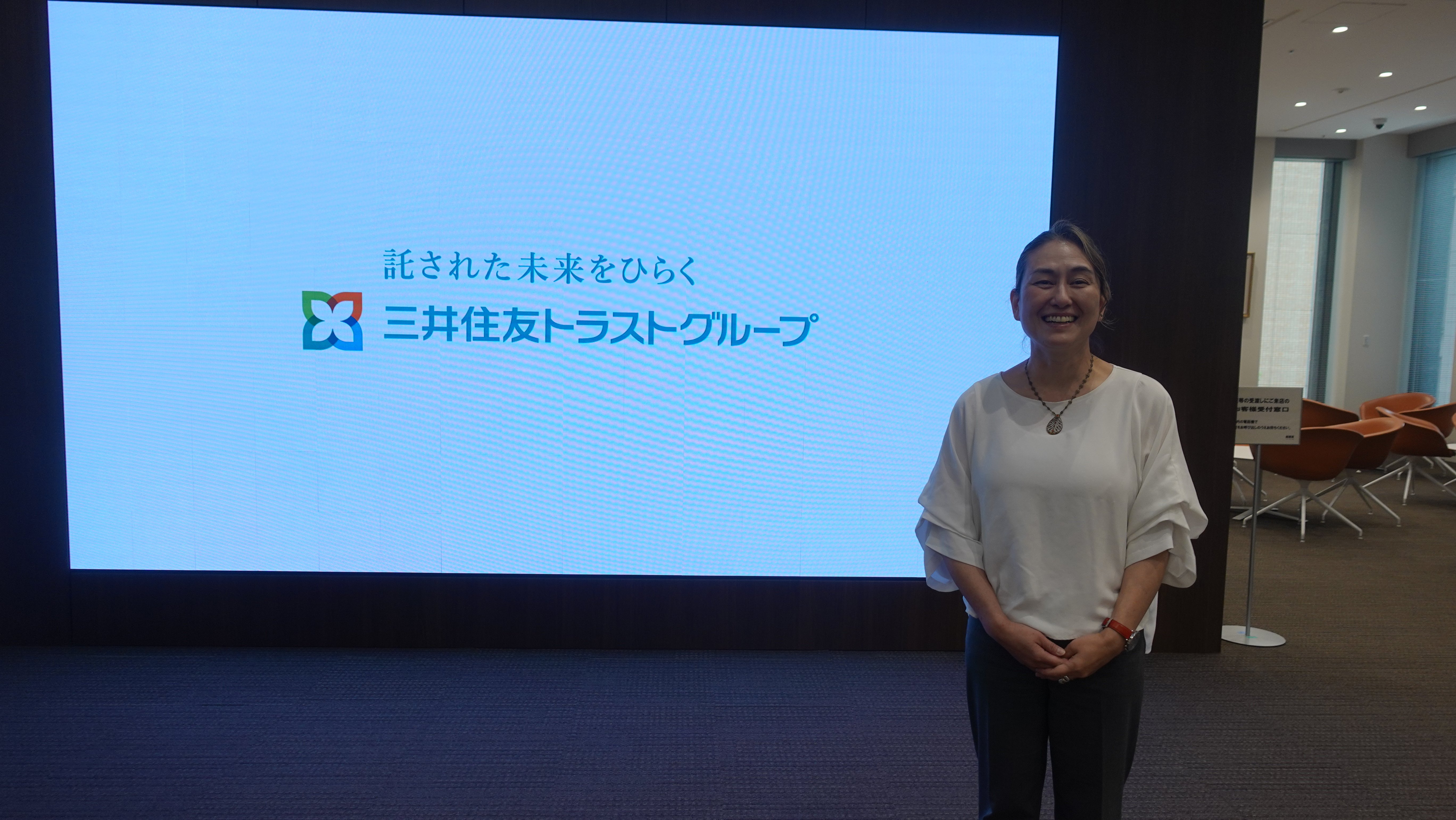
Long-term vision, business management, customer feedback, and sustainable finance. Kahori’s career has moved across different fields, but throughout that journey, she has continued to face complex realities and ask what responsibilities companies should fulfill toward society.
In a world that cannot be divided neatly into black and white, what matters is not simply knowing the right answer. It is the ability to listen to customers, consider one’s responsibility to society, and create ways for organizations to make difficult judgments in practice.
ICS seeks to develop leaders who can face complexity, act with their own guiding principles, and help move society toward a better future.
