


Wise Leaders in Action
2026/11/20
Akira Yoshida (Executive Vice President, CHRO, Deputy CRO, Sompo Japan Insurance Inc.) , Class of 2003
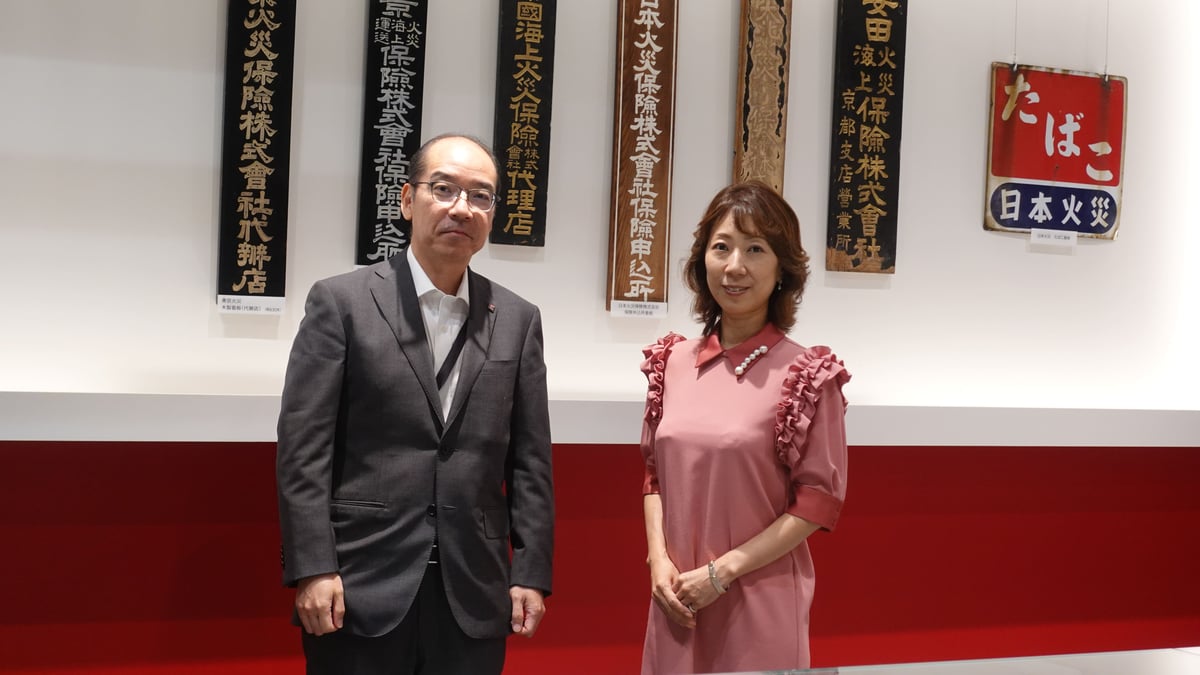
“Whatever happens, you have to face it squarely, think it through, and act. In the end, that’s what it comes down to.”
That is how Akira describes the mindset that has guided him through some of the most demanding moments of his career.
After graduating from Hitotsubashi ICS, Akira built a career spanning product development, human resources, compliance, and internal audit. Along the way, he was involved in the response to the Great East Japan Earthquake and the integration of HR systems following a corporate merger. As head of Legal and Compliance, he also faced serious issues that put the company’s trust under intense scrutiny. Today, as CHRO and Deputy CRO, he is responsible for people and organization while also contributing to crisis and risk management.
As his responsibilities grew, so did the need to look beyond the task immediately in front of him and see the organization as a whole. Looking back, Akira describes one of the most important things he gained at ICS as a “shift in perspective,” something that became increasingly meaningful over the course of more than thirty years.
We spoke with Akira about how he learned to navigate difficult realities, why integrity matters in leadership, and how he thinks about developing the next generation of leaders.
* * *
Seeing the Big Picture
Satoko
What kind of career path did you take after graduating from ICS?
Akira
I came to ICS through my company’s sponsorship. Before coming to ICS, I worked in corporate sales and fire insurance product development, so my work was relatively close to international business.
After returning from ICS, I went back into product development, this time focusing on insurance for individual customers. I spent about nine years working mainly on fire and earthquake insurance. During that time, the Great East Japan Earthquake struck.
I later moved into human resources, followed by Legal and Compliance and Internal Audit. Today, as CHRO, I am responsible for HR while also being involved in crisis and risk management.
Satoko
Did what you learned at ICS become useful right away?
Akira
Not really. At first, what I had learned at ICS still felt somewhat removed from my day-to-day work.
But as my role changed, I gradually began to feel that what I had learned was becoming more relevant to me.
When I was an individual contributor, my focus was mainly on doing the work in front of me accurately and reliably. But once I became a manager in HR, I was increasingly expected to think from the company’s perspective.
I moved into HR in 2012. At the time, Sompo Japan and Nipponkoa Insurance were preparing for their merger, which was planned for fiscal 2014. I was mainly involved in designing the new HR system and in discussions with the labor union.
That put me in a very different position. I was no longer simply explaining my own area of responsibility. I had to speak on behalf of the company and explain how the company itself viewed the issues.
That was when ideas I had studied at ICS, including competitive strategy and finance, began to connect much more directly with my work.
Satoko
You have described the biggest thing you gained from ICS as a shift in perspective.
Akira
Yes. I think that was the biggest thing.
People often say that when you are responsible mainly for your own work, you should try to think like a manager, and when you become a manager, you should try to think like a department head. It helps enormously if you have frameworks that allow you to step back and look at things from a broader perspective. Even when you are focused on the trees in front of you, you still have a sense of the forest. Studying management at ICS gave me that perspective.
As an individual contributor, you may be expected to focus on a relatively narrow area. But if you have a common language for management and a broader framework in your head, you can still ask where your own work fits within the company as a whole.
I think that helped me see my work from a broader perspective even when I was still in an individual contributor role. As my responsibilities expanded, that way of thinking became increasingly valuable.
Turning Theory into Your Operating System
Satoko
Are there any classes or ideas from ICS that have stayed with you particularly strongly?
Akira
Quite a few.
I still remember Professor Hirotaka Takeuchi’s class. We discussed the Coca-Cola case, and I received a huge red Coca-Cola bath towel for speaking up in class. Expressing myself in English was still a challenge for me at the time, so that memory has stayed with me.
Professor Ken Kusunoki’s competitive strategy course also left a strong impression on me. I was a member of his seminar, and for my thesis I wrote a case on Gulliver International (now IDOM).
And Professor Ikujiro Nonaka’s knowledge creation theory was another important influence.
Satoko
What part of it resonated most with you?
Akira
The idea that knowledge creation happens through ba.
I was especially drawn to the importance of informal spaces. Even before I became a manager, I tended to value those kinds of spaces. I never thought of myself as deliberately applying the theory. Rather, the idea gradually became deeply ingrained in the way I think.
Satoko
So it became less something you consciously remembered and more part of how you see and think.
Akira
Yes, I think so. Looking back, ICS gave me a broad foundation in management theory. In a way, it feels like ICS gave me something like an operating system for the way I think.
Changing Without Breaking What Matters
Satoko
Through your work in both HR and insurance, you must have had many opportunities to think about how organizations and ways of working need to evolve. What have those experiences taught you?
Akira
I think we need to keep changing as times and circumstances change. If we focus only on immediate concerns, it is difficult to move forward.
In both HR and insurance, there are times when established processes and systems need to be reconsidered and updated. But the important question is not simply whether to change. It is how you change.
Satoko
What do you mean by that?
Akira
Efficiency is a good example. Reducing headcount too far or streamlining operations too aggressively can have negative consequences. Of course, improving efficiency and streamlining work are necessary, but depending on how they are pursued, they can go too far.
So I do not think the answer is simply to discard something because it is old or adopt something new because it is more efficient. You need to think carefully about what to change, how far to go, and what may be lost in the process.
Satoko
So even when change is necessary, you still need to think carefully about how far to go and how to make that change.
Akira
Exactly. I think it is important to make those judgments carefully as you introduce new ways of doing things.
Articulating the Vision, Acting with Integrity
Satoko
When you became a manager, you were involved in developing the HR system for the merger of Sompo Japan and Nipponkoa and in working with the labor union. You also found yourself in a position where you had to speak on behalf of the company.
As your responsibilities expanded from manager to department head and later head of Legal and Compliance, how did your view of leadership evolve?
Akira
I came to believe that a leader has to do two things at once: hold on to an ideal while also dealing with reality and getting things done.
I have always tended to focus first on doing the work in front of me well. But once you become a leader, that is not enough. You also need a clear sense of where you want to go, and you need to be able to articulate that vision.
Whether you are setting a vision or dealing with day-to-day realities, I think a leader needs to act with integrity and a strong sense of fairness.
Satoko
How do vision and execution reinforce each other?
Akira
There can be a temptation to make a big splash with a bold vision. And having that vision is important. But a bold vision has to be matched by disciplined execution.
You need to articulate where you want to go while also following through on what needs to be done. I think that is what gives your words credibility and, over time, builds trust.
Satoko
During your time as head of compliance, you also faced an extremely difficult period, when the cartel issue and fraudulent insurance claims by a major used car retailer came to light.
Akira
Yes. We caused significant concern and inconvenience to our customers and many other stakeholders, and the company has been working across the organization to make improvements and rebuild trust.
We faced those extremely difficult situations together with many colleagues. My own role was only one part of that effort. But looking back, I think the foundation in management that I had developed through my studies at ICS also helped me navigate those situations.
Satoko
What helped you personally stay grounded through those difficult moments?
Akira
One phrase I value is futō fukutsu, which means remaining steadfast in the face of adversity. Whatever happens, you have to face it squarely, think it through, and act. In the end, that’s what it comes down to.
Developing Leaders Through Theory and Real Challenges
Satoko
Now, as CHRO, you are also responsible for developing the next generation of leaders. What do you think matters most in helping people grow?
Akira
I think there are two things. First, people need to learn sound ways of thinking and build a solid theoretical foundation. Then they need opportunities to take on difficult assignments and work through real challenges. Both are essential.
In my own case, ICS gave me a theoretical foundation in management. After that, I was fortunate to be given opportunities to take on a wide range of roles and responsibilities.
Some of those experiences were very difficult. Without the theoretical foundation I had built at ICS, they might have been little more than difficult experiences. But because I had a way to think about what was happening, I was able to find meaning in them.
Satoko
Has your own experience shaped the way you think about developing leaders at Sompo Japan? Do you try to create opportunities for people to take on difficult challenges themselves?
Akira
Yes, although we are still experimenting with how best to do that.
We keep this in mind when selecting people for management roles at different levels, from managers and department heads to executives. And it is not only about formal training and education. We also try to give people a broader range of experience through job rotations.
We are still exploring how best to create those opportunities.
Thinking Matters More in the Age of AI
Satoko
AI has made access to knowledge far easier than it used to be. In that kind of environment, do you still see value in studying for an MBA?
Akira
Yes, I do. That is why we want to continue sending people from the company to ICS.
The learning environment has changed dramatically. With AI, you can now access all kinds of knowledge almost instantly.
That makes me curious about the employees we have recently sent to ICS. I would really like to hear how they are learning in this new environment and what they are thinking about as they go through the program.
AI can make things much easier if you choose to rely on it. Of course, learning how to use it well is important. But that is exactly why I think the ability to think for yourself matters more than ever.
Step Outside Your Usual World
Satoko
ICS is not only about what happens in the classroom. It also gives students opportunities to step into situations they might never encounter in their everyday work. Are there any experiences that still stand out for you?
Akira
I still remember the team building program in Yatsugatake very well. I even have some of the photos and materials from that time.
The Global Citizenship program also left a strong impression on me. We spent time with children with disabilities and took part in activities supporting homeless people in Shinjuku.
Those were experiences I probably would not have had in my day-to-day work at the company.
Satoko
Why do you think those experiences were so meaningful?
Akira
When companies offer activities like these, they tend to attract people who are already interested.
ICS was different. In a sense, you were placed in situations you might never have chosen for yourself.
That meant meeting people you would not normally encounter and experiencing things you might never have sought out on your own. I think being exposed to that wider world was extremely valuable.
Satoko
Finally, what would you say to people considering ICS, and to students who are studying here now?
Akira
I think ICS gives you much more than knowledge of management or finance. It broadens your perspective.
You are surrounded by people from around the world who have the potential to become leaders. By learning and exchanging ideas with them, you begin to think more deeply about the kind of person you want to become.
Over time, what you learn and experience becomes part of who you are.
There will be difficult moments, of course. But I believe those experiences will stay with you and continue to shape your career long after you leave ICS.
Satoko
Thank you very much for taking the time to speak with me today.
What struck me most was your reflection that the value of what you learned at ICS became clearer over time, as you took on new roles and greater responsibilities.
I look forward to seeing how you continue to lead the people and organizational agenda as CHRO, while developing the next generation of leaders.
Across a career spanning product development, HR, compliance, internal audit, and now the role of CHRO, Akira has consistently looked beyond the task in front of him to see the organization as a whole. The shift in perspective and theoretical foundation he gained at ICS became increasingly valuable as his responsibilities grew.
Leadership, for Akira, is not simply about setting a vision, nor is it only about dealing with the realities in front of you. It is about bringing the two together, articulating where you want to go while acting on what needs to be done. Maintaining integrity throughout that process is what gives a leader credibility and helps build trust within the organization.
ICS seeks to develop leaders who can see reality from a broader perspective, connect ideals with action, exercise judgment with integrity, and help sustain trust within their organizations.
