


Wise Leaders in Action
2026/10/08
Take Yamada (Representative Director, Yokohama Systems Co., Ltd.), Class of 2000
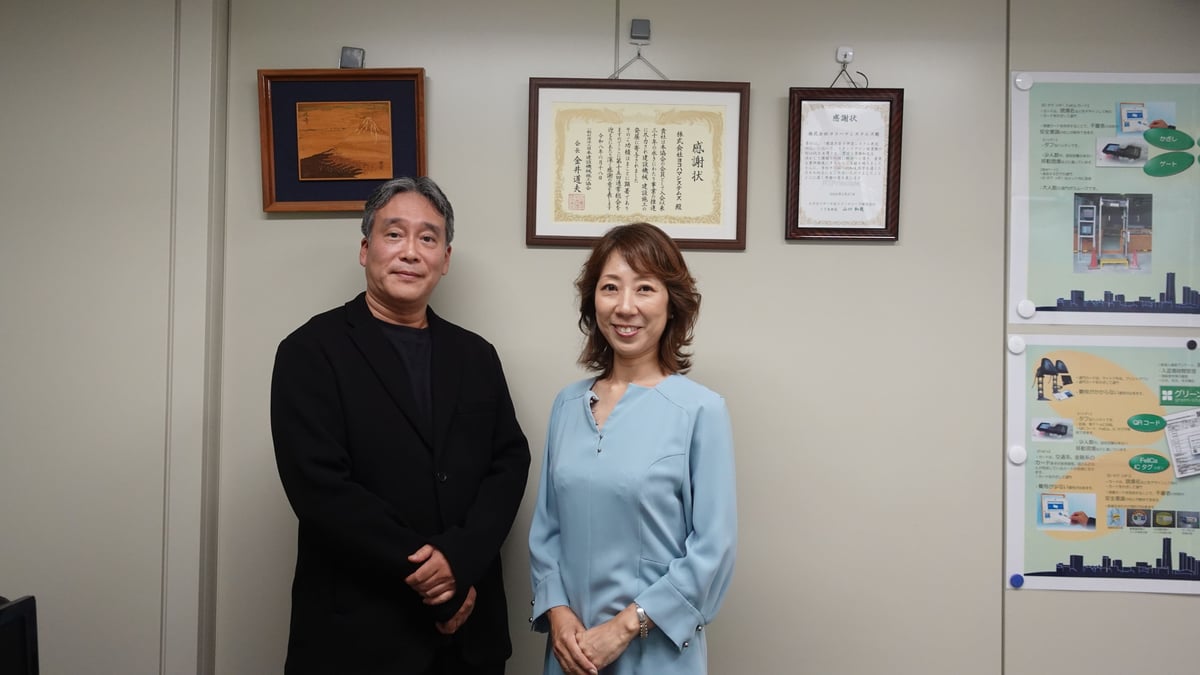
“I think I have always been more interested in starting something than in making it bigger.”
Over time, Take came to understand what drew him most strongly. It was not scale itself, but the challenge of creating something that did not yet exist and turning possibility into reality.
That instinct led him to establish Cueform after the Great East Japan Earthquake and now shapes his work at Yokohama Systems, where he is using emerging technologies to transform clients’ business processes and operations.
For Take, however, building something new is not simply about technology or entrepreneurship. It begins with going to the field, facing real problems, learning from people, and asking a larger question: What should we do for society?
We spoke with Take about entrepreneurship, knowledge creation, Wise Leadership, and what it means to build what does not exist yet.
* * *
Going Where Others Don't
Satoko
What originally brought you to ICS?
Take
The biggest reason was that I wanted to do something entrepreneurial.
I had studied with Professor Hirotaka Takeuchi as an undergraduate and then joined Mitsubishi Corporation. I helped develop consumer electronics sales and service operations in Russia and Ukraine. It was very hands-on work.
Later, our Russia and India team also moved into venture capital. That gave me opportunities to meet entrepreneurs and venture professionals from around the world.
I started thinking, “I’m still young. Maybe I should try starting something myself.”
Satoko
Why did you choose ICS?
Take
I was part of ICS’ first class, and at the time, Mitsubishi Corporation did not sponsor employees for the two-year MBA program in Japan. So, if I wanted to go, I had to leave the company.
One executive asked me, “You could probably do everything you want to do here. Why leave?”
But ICS just seemed more interesting. Professor Takeuchi had also told me that it would be a good place to study entrepreneurship. So, I went.
Satoko
What stood out to you most about your time at ICS?
Take
Professor Norihiko Shimizu’s seminar was very important. We studied venture finance and venture management.
I also did an internship with a small M&A advisory firm in San Francisco, where I had the chance to work on several live deals. That was the kind of experience I probably would not have had otherwise.
Professor Shimizu often told us to “go where others don’t.” The idea was not to follow the same path as everyone else, but to look for opportunities where others were not looking.
Those of us in Professor Shimizu’s first seminar group still carry some of that mindset.
When Starting Is Not Enough
Satoko
What did you do after graduating from ICS?
Take
I first joined the Japan operation of Scient, a U.S. consulting firm, during its early stage.
At the time, the idea was to bring together digital, web, and strategy. I spent a little under two years there before moving to a venture company.
I became involved in fundraising, including raising capital from venture firms and negotiating with banks.
But no matter how much I spoke with the CEO and the management team, I could not see how the business was going to keep going.
Satoko
What was that experience like for you?
Take
It was very difficult.
Because I had been involved in raising the money, I felt a real sense of responsibility. I remember asking an accountant I trusted, “What should I do with my life?”
Eventually, I realized that I was still an employee, not the person ultimately responsible for running the company, and that leaving was also an option.
It was a difficult period.
Finding What Draws You In
Satoko
You then started your own company.
Take
Yes. About six of us started a consulting firm together.
We decided to focus on new business development for large companies and startups.
We worked with companies such as Recruit and major real estate firms. For example, we were involved in the early development of what later became SUUMO.
Because we were small, we deliberately chose not to compete with large consulting firms on operational improvement or large-scale transformation projects. We focused entirely on new business development.
We also worked with portfolio companies backed by venture capital firms. At one point, I served on the boards of several companies while helping launch IT startups and supporting companies preparing to go public.
Satoko
Did that experience help you understand something about yourself?
Take
Yes.
After about five years, I decided to step away for a while. My wife and I spent about a year traveling, and that gave me time to think about what I really wanted to do.
I looked back at some of my old ICS documents. When I entered ICS, I had written that I wanted to do something entrepreneurial. When I graduated, I had written essentially the same thing.
After working with so many startups and new businesses inside large companies, I realized that what I really enjoyed was not necessarily scaling a business.
I liked creating something from the beginning.
Of course, scaling matters too, and some people are very good at it. But I think I am more drawn to starting something new and bringing it to life.
From Building for People Who Need It
Satoko
What did you create after that?
Take
After the Great East Japan Earthquake, we started thinking about how difficult it was for some older people to access information. At the time, many were not yet comfortable using mobile phones or the internet.
Television, on the other hand, was already part of everyday life.
So I began thinking about whether we could use television to deliver useful information directly into people’s homes.
That became Cueform.
Satoko
How did you think about the business opportunity?
Take
I never thought it would become a very large business.
The target market was quite niche. But the service is still running; it has gradually expanded, and tens of thousands of people have used it.
Initially, we considered building it within a large corporate group.
But a service like this needs to continue for five or ten years. In a large organization, leadership changes and priorities can shift.
So, we decided it would be better to build it outside the organization and create a structure that could sustain it over time.
Turning Technology into Real Change
Satoko
What are you trying to build today at Yokohama Systems?
Take
The company was originally a systems integrator.
But over time, it had become more like a software development company. We were not doing much real integration anymore.
I want to bring that back.
Satoko
What does “integration” mean to you?
Take
It means understanding new technologies and using them to change how clients work and how their processes operate.
It is not just about building whatever system the client asks for. It is about asking, “Could this work be done differently?”
That also means our engineers need to do more than software development. They need to understand what the client really needs and eventually be able to contribute to business development as well.
We are also using AI extensively. Internally, I basically tell people they can use as much AI as they want. Our teams are building with LLMs themselves.
Going forward, what matters will not simply be whether you can use AI. It will be what you can change with it.
Satoko
At the same time, you seem to put a great deal of emphasis on being in the field.
Take
Absolutely.
For example, we built a system to help municipalities coordinate toilet trucks during disasters.
The process had largely been manual, with many steps and several approvals within local governments. We set ourselves the goal of reducing the entire process to something that could be completed within an hour.
But once the system was actually used during a disaster, new problems emerged.
What happens after the truck arrives? How do you handle clean water and wastewater? Who is responsible for each part of the operation?
You cannot fully understand those things until the system is actually being used.
So, we went to the field and quickly redesigned the operating process.
With disasters, there are many things you only discover once something actually happens. That is why, for us, it is the field, the field, the field.
Satoko
How does that connect with what you learned about knowledge creation at ICS?
Take
Today, I see knowledge creation as something very concrete in the field.
Tacit knowledge does not develop without experience.
You go to the field. You work with people. Problems happen.
That is how knowledge begins to accumulate.
Asking What Is Right for Society
Satoko
What kind of culture are you trying to build inside the company?
Take
I want us to keep asking one question: What should we do for society?
I tell people, “Even if we disagree, we should keep talking.”
I ask questions even of first-year employees. When they think for themselves and respond, you can see them become more energized. I would like that kind of culture to spread.
Satoko
Why is that question so important to you?
Take
I used to have many customers in both Russia and Ukraine, so both countries felt very familiar to me. That is why I never imagined they would end up at war.
You look at that and think, “How can this happen?”
Someone has to think about how we can make things better, even if it is not their responsibility. I think we have to keep thinking about what is happening in the world.
Satoko
Did your experience working in Russia also shape that perspective?
Take
Very much.
When I was working in Russia, I saw some very difficult realities. Those experiences made me realize that ideals matter, but the real world can be much harsher.
The world is not clean or simple. You have to work through messy realities, make a living, and think about your own life at the same time.
I want younger people to understand that reality too.
Leadership Beyond Titles
Satoko
How do you think about leadership?
Take
I am actually not very good at answering that question.
If someone asks me, “What is leadership?” I honestly do not know. Maybe it is something we keep thinking about.
But I do tell our employees that managers and leaders are different.
A manager needs to understand processes and logic and make sure the organization works properly.
A leader is different. I think leadership comes from having a conviction, a sense that “this is what we should do.”
What I want is a team where different people can step up and lead in different situations.
Leadership should not depend on title or position.
Depending on the situation, a different person may need to take the lead.
I would like everyone to be able to exercise leadership when the situation calls for it.
Immerse Yourself in Something You Care About
Satoko
What do you remember most about your time at ICS?
Take
I really liked Professor Ikujiro Nonaka.
One thing I clearly remember is that we had worked incredibly hard on a project, but he barely looked at the final output.
Instead, he said, “You worked hard to get here, didn’t you? That was the class.” What mattered was the process.
Professor Shimizu was almost the opposite. His view was much closer to, “The result is what matters.”
I found that contrast fascinating. It was one of the most interesting things about ICS for me.
Satoko
Finally, what would you say to current and future ICS students?
Take
I simply had a great time at ICS. What made it fun was that we were all giving it everything we had.
When I entered ICS, I wanted to do something entrepreneurial. When I graduated, I still wanted to do something entrepreneurial. But my idea of what a venture meant then is completely different from how I see it today. And I think that is fine.
In the end, perhaps the question is how to live a life you enjoy.
Find something, anything, that you can become deeply absorbed in.
I think that kind of experience stays with you and becomes a source of strength.
Satoko
Thank you very much for your time today.
I was struck by how the meaning of “building something new” has evolved throughout your career, from entrepreneurship and new business development to frontline problem-solving and organizational leadership.
I look forward to seeing how you and your colleagues at Yokohama Systems continue to turn real-world problems into new value.
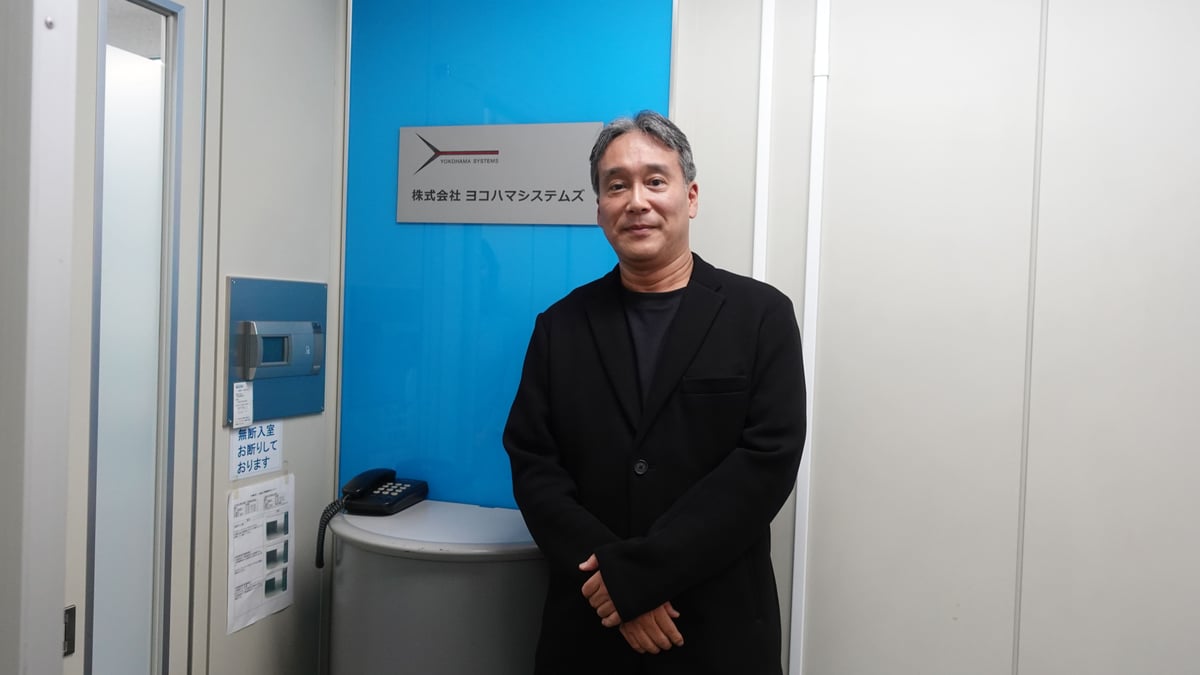
Take’s career has been driven by a persistent curiosity about building what does not yet exist. Over time, however, the meaning of “building” has deepened. Starting something new is not enough. Technology alone is not enough. Ideals alone are not enough. What matters is going into the field, working with people, understanding what society needs, and turning what you learn into something that creates real value for others.
His approach is about holding on to ideals while facing reality as it is.
ICS seeks to develop leaders who can face uncertain realities, ask what is right for society, mobilize people and knowledge, and create value that did not exist before.
